Stone Town Heritage Tour
A guided walk through the living history of Stone Town — a UNESCO World Heritage Site — taking in its most storied landmarks, from sultans' palaces and grand cathedrals to bustling bazaars and Persian baths.
Itinerary — 13 heritage stops
1. The Old Fort
The Fort is adjacent to the House of Wonders, and is a heavy stone fortress that was built in the 17th century by the Omanis to protect the regime from a Portuguese invasion. It has a roughly square shape; the internal courtyard is now a cultural center.
2. House of Wonders
The House of Wonders (also known as “Beit-al-Ajaib”), lies at the edge of the seafront, and is the most recognizable landmarks of Stone Town. It was built in 1883 and restored after the Anglo-Zanzibar War of 1896. The house was primarily the Sultan’s residence and was the first building in Zanzibar to have electricity as well as the first building in East Africa to have a lift. It became the seat of the Afro-Shirazi Party after the revolution and was converted into a museum.
3. The Old Dispensary
The Old Dispensary was built from 1887 to 1894 by wealthy local Indians to serve as a charity hospital for the poor but was later used as a dispensary. The building is one of the highly decorated buildings on the Island and the architecture stems from the cultural pot that existed on the island. After falling into decay in the 1970s and 1980s, the building was accurately restored by the Aga Khan Trust for Culture.
4. Sultan’s Palace
The former residence of the Sultans of Zanzibar, now the Palace Museum. Its rooms display original furnishings, royal memorabilia and photographs from the era of the sultanate.
5. Roman Catholic Cathedral of St. Joseph
The Church was built by French missionaries between 1893 and 1898. The design of the church was based on that of the Marseille Cathedral. Its twin masts are its most recognizable feature and can be seen from a distance when sailing into Stone Town. The church is still operational today and holds regular mass on Sundays.
6. The Anglican Cathedral of Christ
The Church of Christ was built in the heart of Stone Town by Bishop Edward Steere at the site of the former slave market. The church was deliberately built to celebrate the end of slavery and the church’s altar is built upon the site where the main whipping post of the market used to be. A monument to the slaves, as well as a museum on the history of slavery, are besides the church.
7. Hamamni Persian Baths
The word “Hamamni” means “the place of the baths” and the Baths were built between 1870 and 1888 for sultan Barghash bin Said for use as public baths, and maintained this function until 1920. They are referred to as “Persian” because their construction was commissioned to Shirazi architects. The baths were usually for the wealthy and attracted people from all different ethnic groups. The baths are not operational anymore and most of the structures that used to be restaurants and cafes adjacent to the baths have become residential complexes.
8. Malindi Mosque
Built by Sunni Arabs in the 15th century, the Malindi mosque is one of the oldest mosques on the island. The mosque has some unusual architectural features, including a cone-shaped minaret and a square platform where the minaret stands on. There are only two other mosques with similar architecture in East Africa.
9. Tippu Tip’s House
The home of the Islands most powerful merchant and slave trader Tippu Tip. Tippu Tip’s house remained a private residence up until the Zanzibar Revolution and was then converted into a block of flats. The house is not open to the public despite it being declared a tourist attraction.
10. David Livingstone’s House
Before David Livingstone began his expedition into the interior of Tanganyika he spent time preparing for his expedition in Zanzibar. His house was initially built as a small palace for Sultan Majid bin Said, however was then given to European missionaries.
11. Forodhani Gardens
The Gardens are located along the Stone Town Sea wall in front of the Old Fort and is a popular place for gathering come dusk. The Park quickly becomes crowded with locals and tourists trying to enjoy Zanzibari cuisine. The Park was recently rehabilitated as part of the Aga Khan Trust for Culture project.
12. Darajani Market
The Darajani market runs along the entire Darajani Road on the Island and is the main mark et for food on the Island. The Market was built in 1904 and is primarily for obtaining fresh foods, however recently many Consumer electronic shops have risen. The market still has a similar atmosphere to the Bazaars that existed on the island for centuries.
13. Prison Island
Prison Island (more accurately called Changuu island) used to be a prison where uncooperative or stubborn slaves were sent for treatment. The Island was in-inhabitted but later with the British arrival became a prison site to quarantine people with yellow fever. The government converted all quarantine buildings into guest houses and the island is home to Giant Aldabra tortoises, brought to the island from Seychelles.
Packages & pricing
Per-person rates — the larger your group, the lower the price. Pick your group size to see the total.
Stone Town Tour
Half dayThe classic Stone Town & Architectural Settlement experience.
- Entrance fees
- Car parking fees
- Pick-up & drop-off from your hotel
- Visit the Anglican Church
- Visit the House of Wonders
- Visit the food market
- Visit the Old Fort
- Visit Africa House
- Visit the narrow streets & Zanzibar doors
- One 1.5L bottle of drinking water per person per day
- A Driver/Guide
Full details & price table
| Group size | Price per person |
|---|---|
| 1 person | $120 |
| 2 people | $70 |
| 3 people | $50 |
| 4 people | $45 |
| 5 people | $40 |
| 6 or more | $40 |
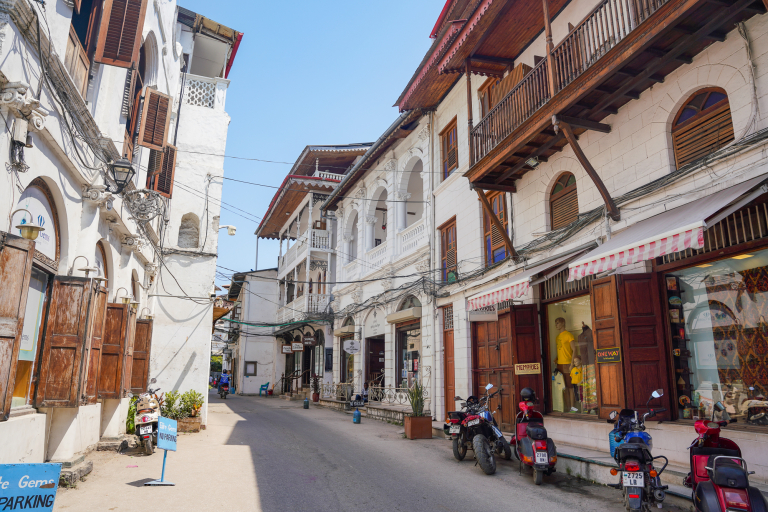
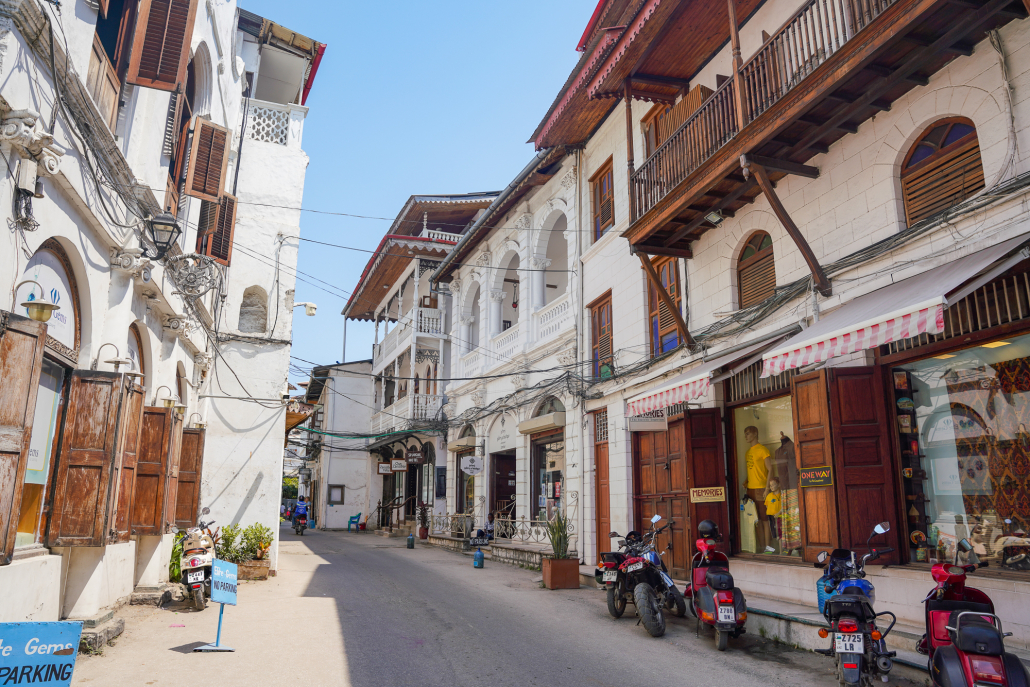
Experience the attractions of Stone Town — a UNESCO World Heritage site and the historic heart of Zanzibar City. Once a hub for the trade of ivory, spices and slaves, its winding alleys are lined with Swahili dwellings, Arab townhouses, Indian merchant houses and elegant palaces. The tour also covers the Architectural & Settlement experience, taking in the distinctive features that reflect the island’s many cultures.
Stone Town & Spice Farm Tour
Half day · Spice Farm 09:00–10:00Stone Town plus an immersive spice plantation visit.
- Entrance fees
- Car parking fees
- Pick-up & drop-off from your hotel
- Visit the Anglican Church
- Visit the House of Wonders
- Visit the food market
- Visit the Old Fort
- Visit Africa House
- Visit the narrow streets & Zanzibar doors
- One 1.5L bottle of drinking water per person per day
- A Driver/Guide
Full details & price table
| Group size | Price per person |
|---|---|
| 1 person | $125 |
| 2 people | $80 |
| 3 people | $65 |
| 4 people | $55 |
| 5 people | $50 |
| 6 or more | $50 |
Experience the attractions of Stone Town — a UNESCO World Heritage site and the historic heart of Zanzibar City. Once a hub for the trade of ivory, spices and slaves, its winding alleys are lined with Swahili dwellings, Arab townhouses, Indian merchant houses and elegant palaces. The tour also covers the Architectural & Settlement experience, taking in the distinctive features that reflect the island’s many cultures.
Spice Farm Tour — Zanzibar is famed for its spice trade. Wander a working plantation with an expert guide and learn the origins of the island’s most profitable industry, tasting and smelling the wide variety of spices grown here.
Stone Town + Prison Island & Nakupenda
Full day · Prison Island & Nakupenda 14:30–18:45Stone Town in the morning, island & sandbank in the afternoon.
- Entrance fees
- Boat services during the tours
- Car parking fees
- Pick-up & drop-off from your hotel
- Food & snacks at Prison Island & Nakupenda
- Visit the Anglican Church
- Visit the House of Wonders
- Visit the food market
- Visit the Old Fort
- Visit Africa House
- Visit the narrow streets & Zanzibar doors
- One 1.5L bottle of drinking water per person per day
- A Driver/Guide
Full details & price table
| Group size | Price per person |
|---|---|
| 1 person | $240 |
| 2 people | $140 |
| 3 people | $120 |
| 4 people | $100 |
| 5 people | $95 |
| 6 or more | $90 |
Experience the attractions of Stone Town — a UNESCO World Heritage site and the historic heart of Zanzibar City. Once a hub for the trade of ivory, spices and slaves, its winding alleys are lined with Swahili dwellings, Arab townhouses, Indian merchant houses and elegant palaces. The tour also covers the Architectural & Settlement experience, taking in the distinctive features that reflect the island’s many cultures.
Prison Island & Nakupenda Beach — Prison Island offers a glimpse into the island’s past and is today a nature reserve home to giant tortoises. The same outing includes the stunning Nakupenda sandbank — a strip of white sand surrounded by turquoise sea.
Meeting point
Walking tour; hotel pickup can be arranged.
Open in Google Maps